Urban Park Interface

A Transit-Oriented

Feasibility Study


  • Raleigh, North Carolina
  • 2026

About this Project

The Urban Park Interface is a data-driven feasibility study prepared by Clear Site Analytics to determine the highest and best use for a corner assemblage in Raleigh, NC. The project bridges the gap between urban density and parkland preservation by utilizing a contextual “E-Shaped” building footprint. This design maximizes lot coverage while respecting the pedestrian scale, integrating 35% green space through an extensive bio-retention green roof system and a central internal sanctuary. Anchored by a modern industrial aesthetic, the 3-story mixed-use development yields approximately 85 to 90 residential units and prioritizes transit-oriented connectivity to the Raleigh greenway system.

Role:

Urban Designer & Lead Analyst

Tasks:

Lead Urban Designer: Authored the site strategy and massing logic, utilizing an “E-Shape” footprint to create a protected internal courtyard while maintaining an active street edge.

Feasibility Analyst: Conducted a comprehensive highest and best use study to evaluate the site’s potential for mixed-use residential development in a high-growth corridor.

Zoning & Compliance Lead: Performed a detailed analysis of Raleigh’s Unified Development Ordinance (UDO) to ensure the design met all requirements for height, setbacks, and land use.

Sustainability & Resilience Strategist: Designed a green infrastructure program featuring a bio-retention green roof and central oval lawn, exceeding municipal green space requirements by 25%.

Yield & Programming Lead: Calculated precise development stats, including a 96,000 SF gross building area and a lifestyle-focused unit mix targeting young professionals and empty nesters.

AI Workflow Integration: Leveraged AI-driven computational tools to rapidly iterate on massing configurations and automate the production of data-driven site investigations.

Software Utilized:

Google Earth | SketchUp | Photoshop | Nano Banana
 

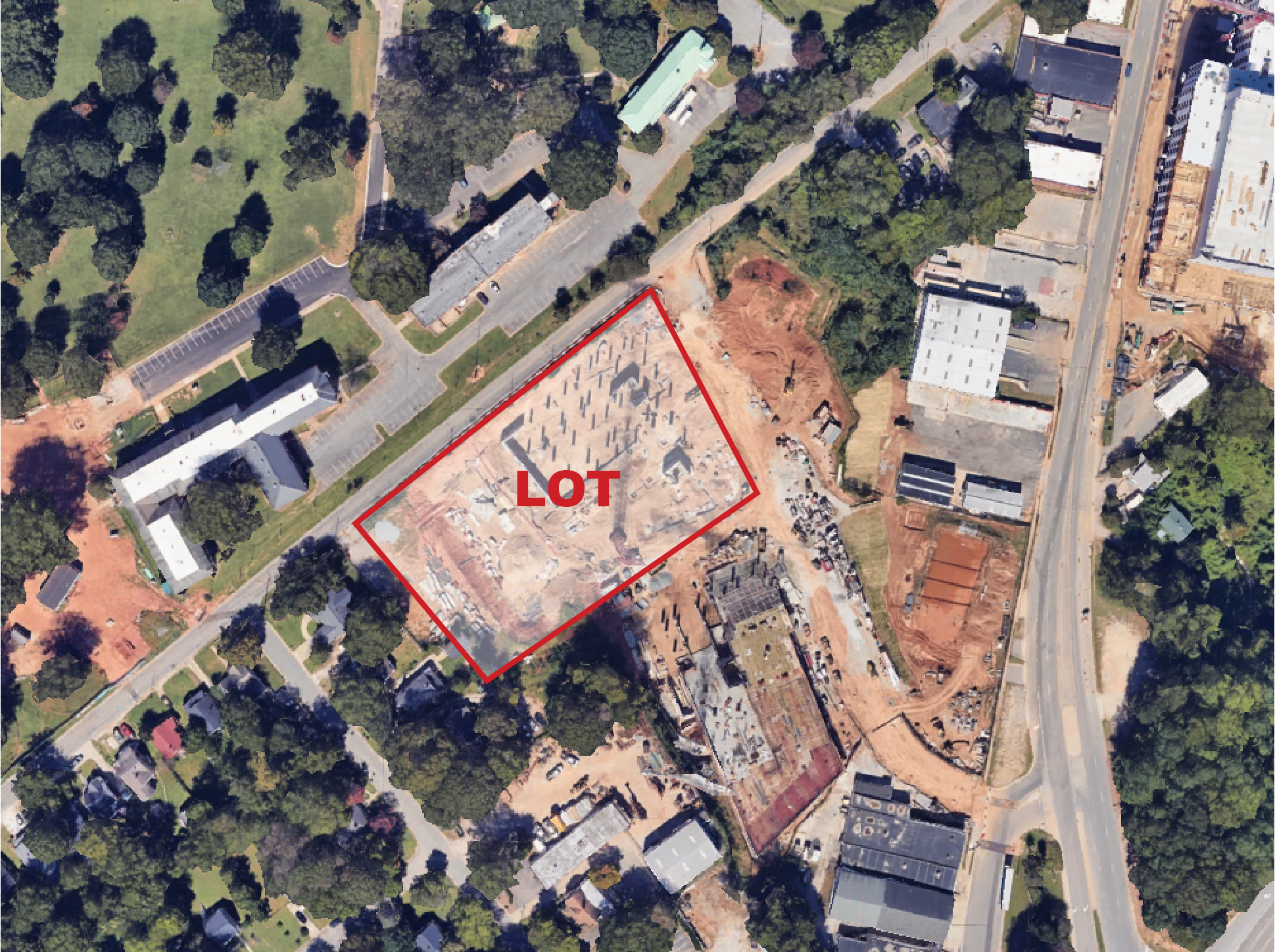
Positioned as a critical gateway, the lot sits directly on the edge of a regional park. While currently an underutilized urban gap, the site features exceptional mobility potential with a Walk Score of 85 and a Bike Score of 92. The surrounding area is characterized by a historic industrial warehouse vernacular, providing a unique “park-side” premium for high-density redevelopment.

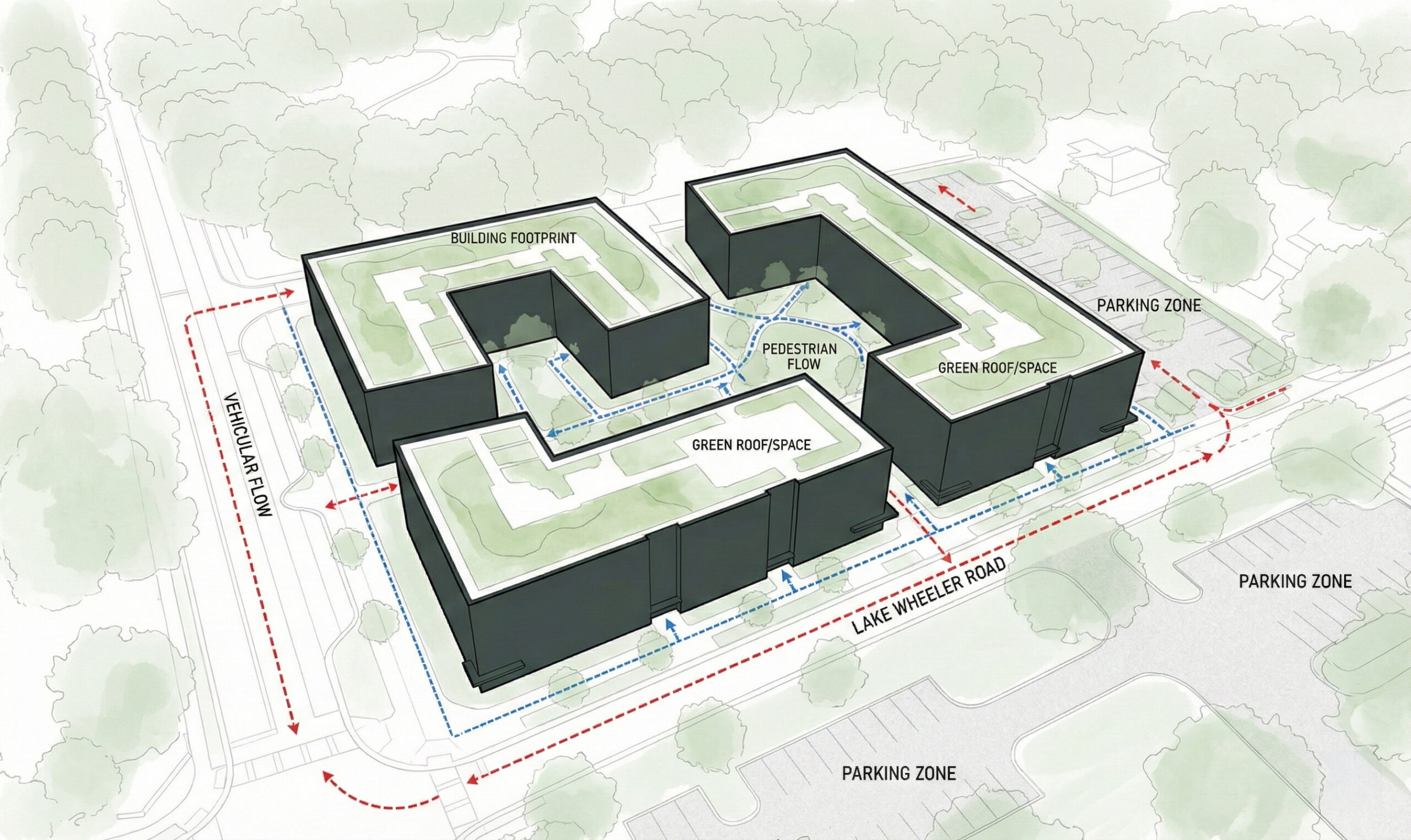
This conceptual diagram illustrates the primary design logic for the corner lot. By utilizing an “E-Shaped” building footprint, the design pushes the active building edge to the street corner while creating a protected internal sanctuary that mimics the adjacent park greenery. The diagram highlights the strategy for integrated vehicular and pedestrian flow, emphasizing the high-mobility nature of the site.

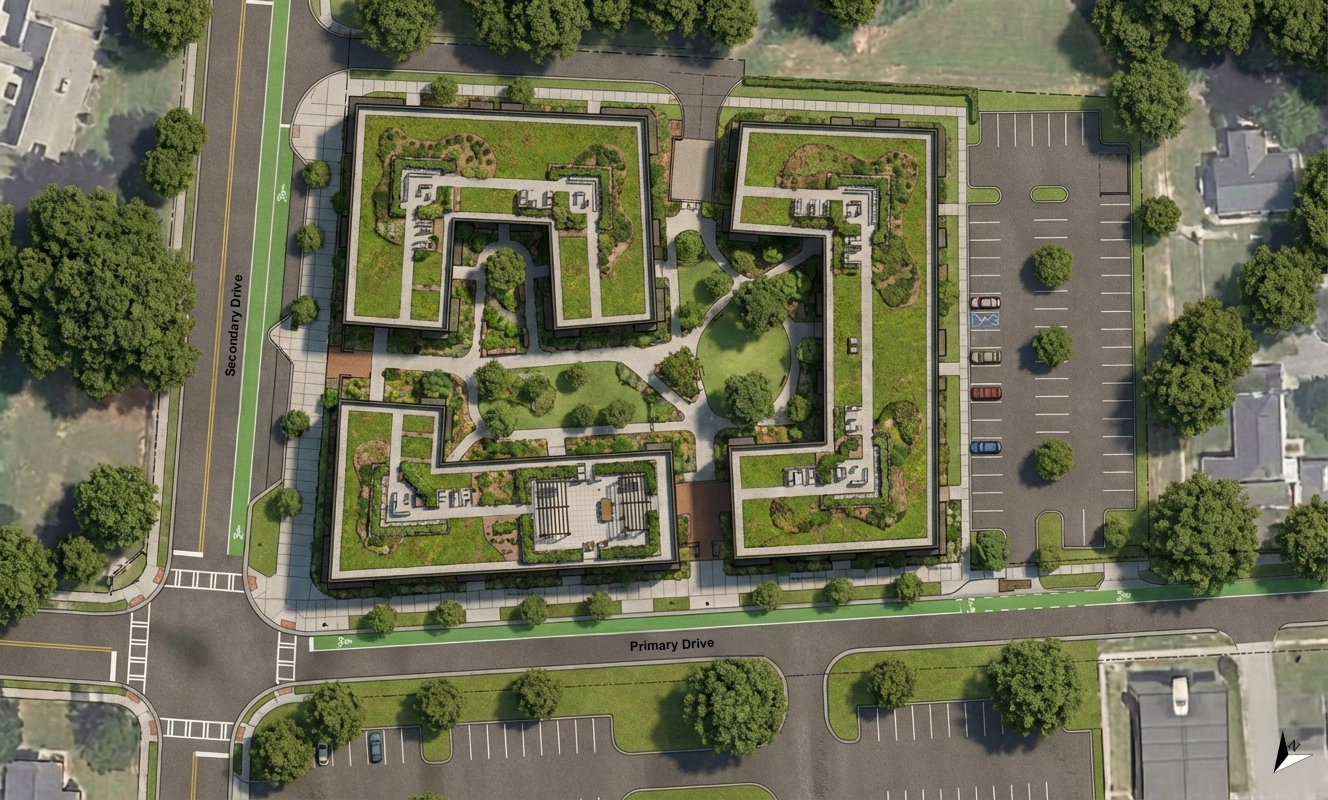
This conceptual site plan illustrates an integrated mobility strategy that prioritizes the human experience. By directing service and resident traffic to the site perimeter, the design ensures a quiet, pedestrian prioritized core. Primary access points lead into a central internal sanctuary featuring an oval lawn and walking paths, while surface parking is tucked to the side and screened from the primary intersection to minimize visual impact on the public realm.

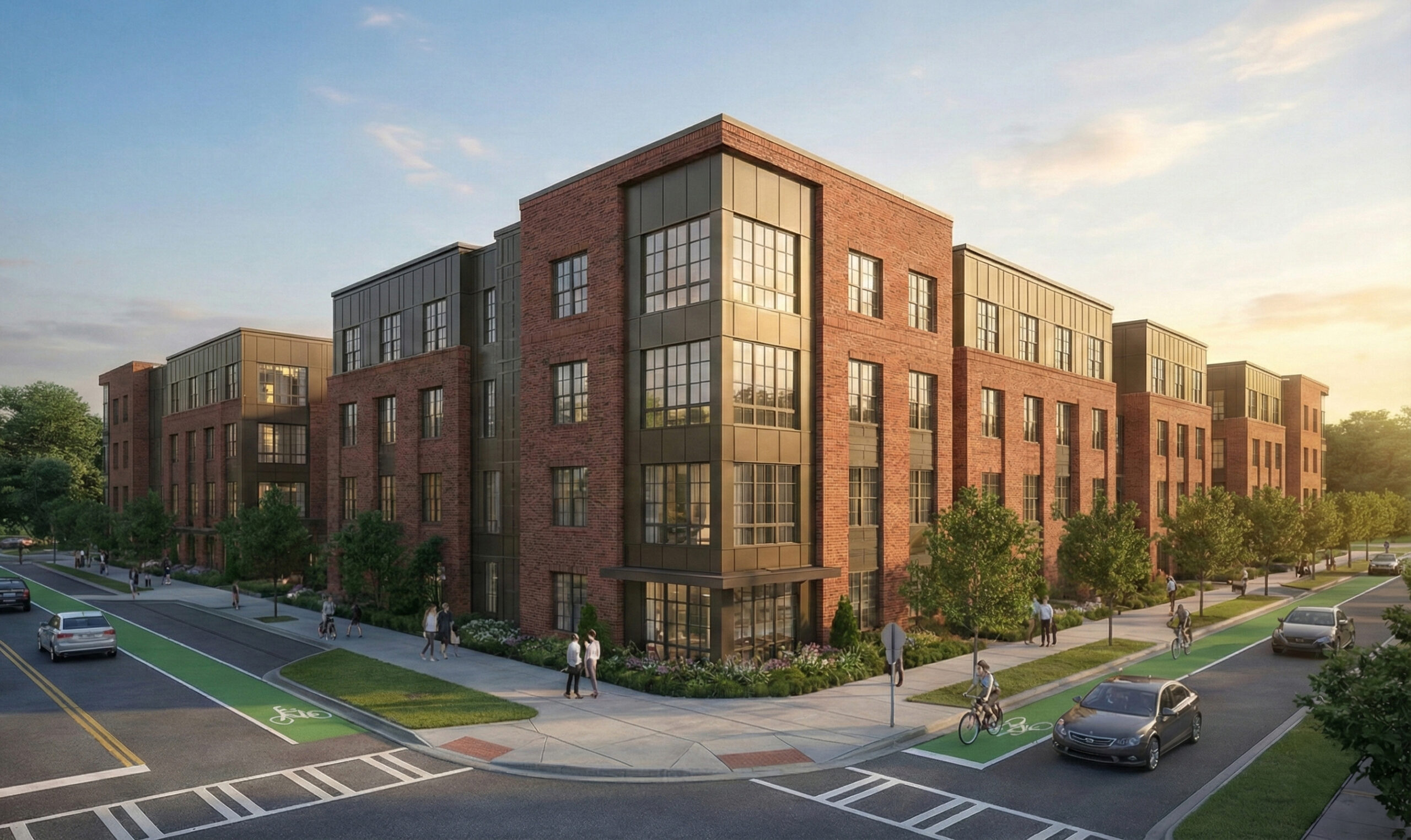
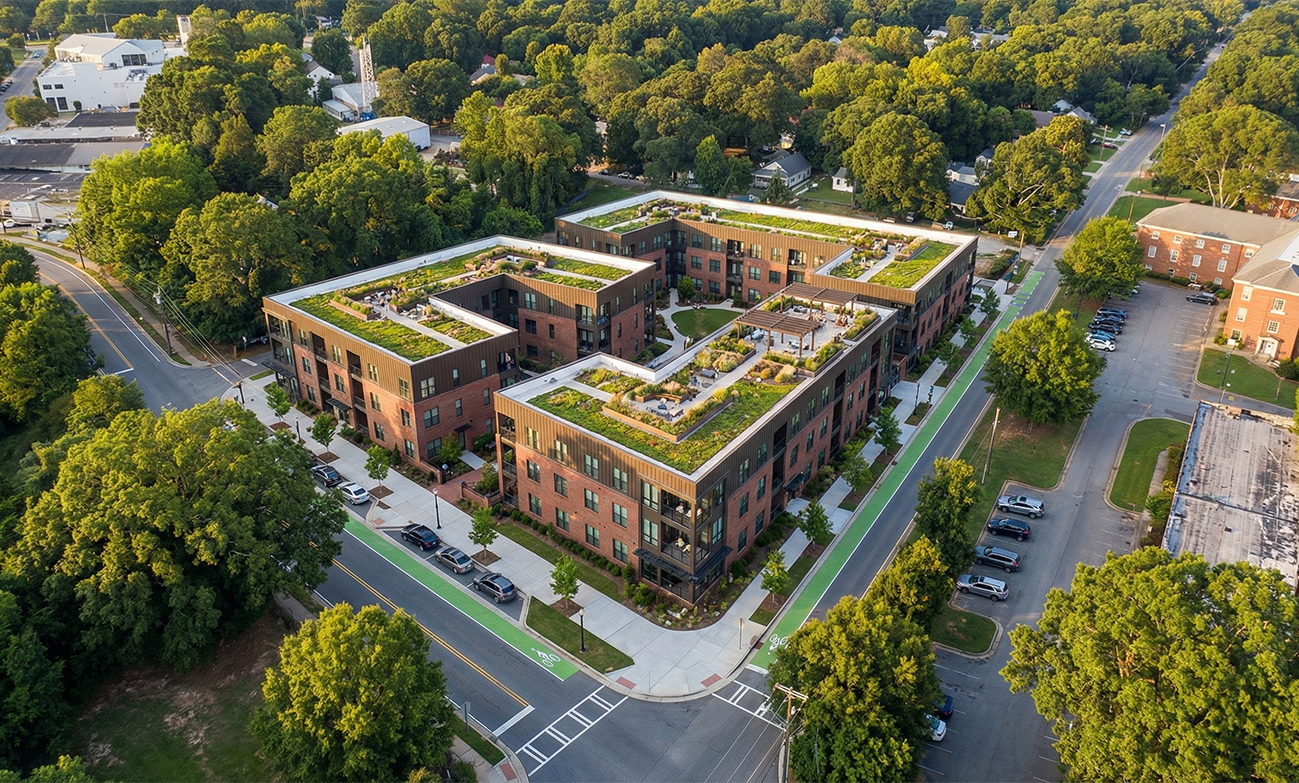
The project massing utilizes a rich red brick façade paired with dark bronze metal panels, nodding to Raleigh’s historic industrial warehouse vernacular. This aerial view demonstrates the relationship between the 3-story building height and the surrounding urban canopy, ensuring that high-density development contributes positively to the public realm. Large industrial-style windows anchor the corner condition to maximize transparency and engagement with the streetscape.

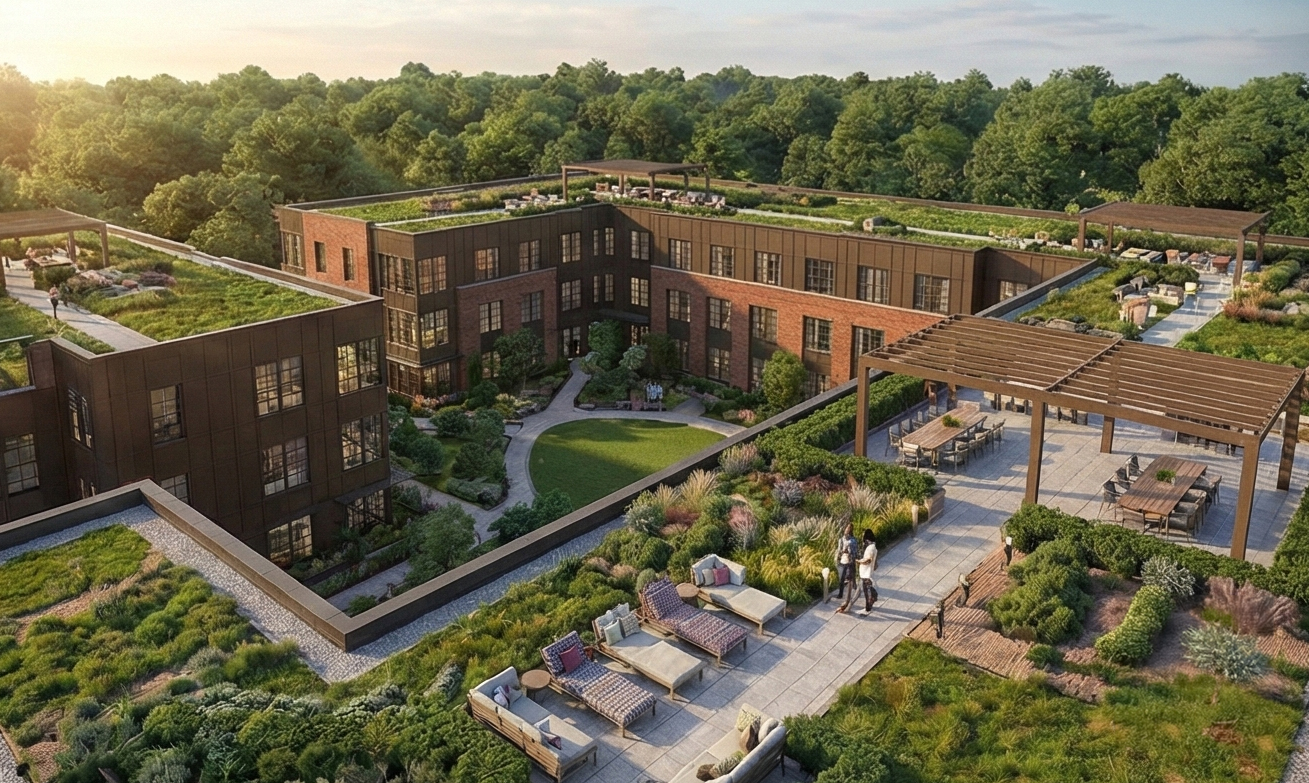
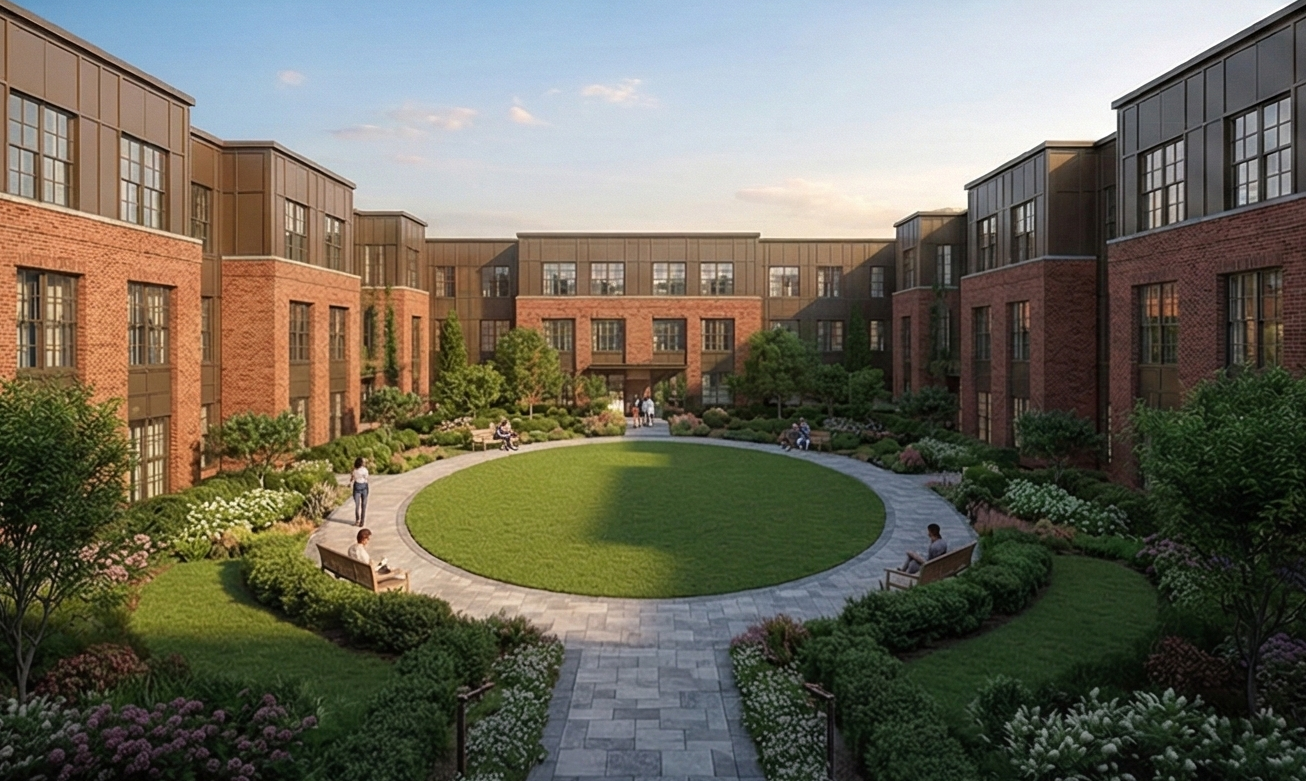
A core component of the site concept is the 35% green space allocation, which significantly exceeds the municipal 10% requirement. This view showcases the internal “E-Shape” courtyard and the extensive bio-retention green roof system, designed to reduce the heat island effect and provide a visual extension of the park canopy. These amenities, including the central oval lawn and walking paths, target a lifestyle-focused resident base that values park access.

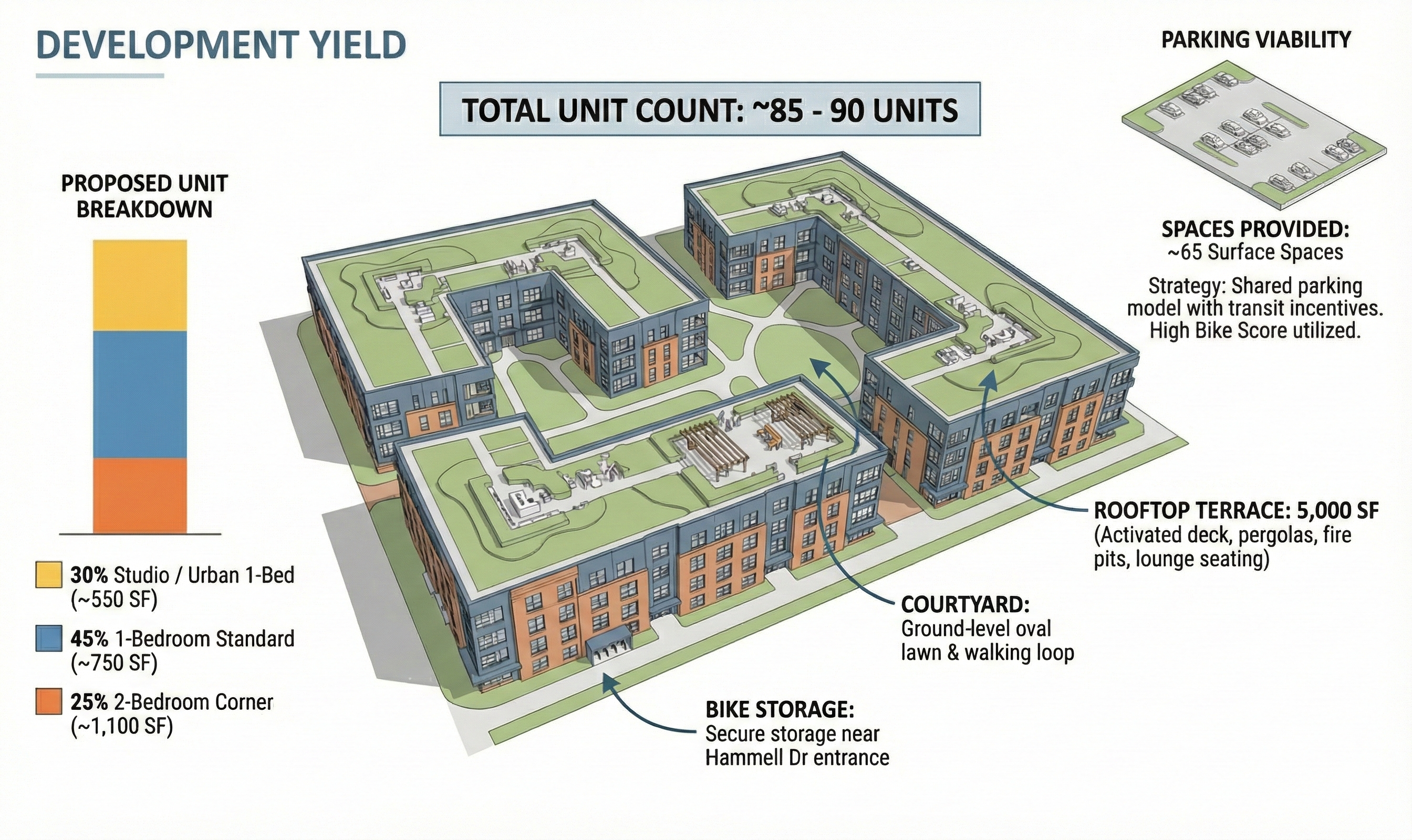
This isometric breakdown details the project’s data-driven feasibility, yielding approximately 85 to 90 residential units across 96,000 gross square feet. The programming includes a 5,000 SF activated rooftop terrace and dedicated secure bike storage to support a transit-oriented lifestyle. The yield analysis prioritized green infrastructure over excessive asphalt, utilizing a shared parking model that fits within the site’s high-density context.